
Operational autonomy for distributed Edge infrastructure
Coolbit AI combines geospatial observability, machine learning, and local agents to help the NOC supervise lights-out sites and keep thermal parameters safe even when the main connectivity drops.
Local agents keep processing the site’s context and sync the information asynchronously once the connection is available again.
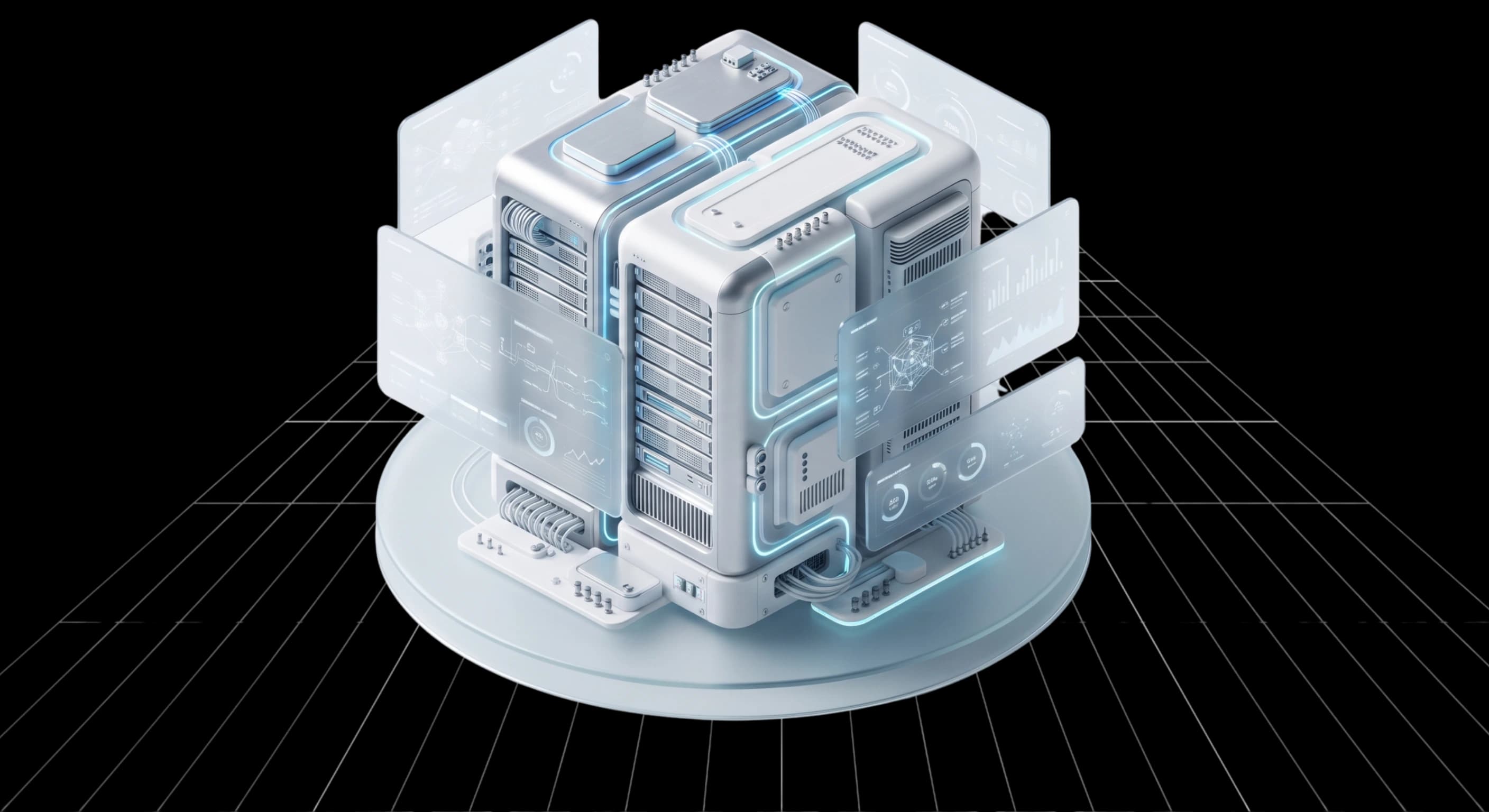
Dispersion
When infrastructure spreads out, how it’s operated changes too
Micro data centers and Edge sites can operate with little or no permanent human presence.
The challenge isn’t only monitoring more locations.
It’s operating a distributed fleet without relying on a specialist at every node.
Distance turns simple questions into operational decisions
Geospatial observability
From isolated sites to a single operational view of the fleet
Coolbit AI incorporates geospatial observability to represent Edge nodes’ status within a centralized view. The NOC can use geography as a decision layer and navigate from the fleet down to the incident.
Navigation path
The fleet view can concentrate
Which of my sites needs attention now, and why?
Geography stops being a dispersion problem and becomes a dimension of the operational context.
Predictive triage
Diagnose before mobilizing
Coolbit AI uses machine learning to correlate thermal, electrical, and operational alarms within the site’s context. The analysis incorporates the available relationships between:
This enables predictive triage and uses the confirmed alarm management capabilities to:
Before dispatching Field Service, the NOC can understand what’s happening and what needs review.
Resolve before mobilizing
Resolve more questions from the NOC before sending a technician
Every exploratory visit consumes time and resources. Coolbit AI reduces the need to mobilize staff just to discover:
Coolbit AI helps reduce redundant diagnostic trips by preparing the incident before mobilization.
No universal reduction percentage is published until a measured operational baseline exists.
SOPs for Field Service
Bring the procedure to the incident before reaching the site
When a physical intervention is necessary, the technician shouldn’t start by rebuilding the problem from scratch.
Coolbit AI relates the diagnosed condition with
When procedures and inventories include tools or spare parts, that context can also be used to prepare the intervention.
Explore AI-assisted operating procedures →Before mobilizing, the team can review
Local agents
Bring intelligence to the site, not just data to the cloud
Every Edge node can have local Coolbit AI agents deployed within the infrastructure. These agents bring analysis capacity closer to the telemetry source.
Its function can include
Conceptual architecture
Edge doesn’t depend exclusively on sending every decision to a central layer before it can react.
Local processing
Process context where the condition happens
Local processing reduces reliance on a continuous connection to run the logic that must stay available on-site.
Why it matters
At an Edge site, network latency and availability can vary.
Processing at the node lets certain critical functions stay available without waiting for constant communication with the central layer.
Coolbit AI can process locally
Disconnected operational resilience
Keep thermal parameters safe even when the connection is lost
An interruption in cellular, fiber, or the main link shouldn’t automatically turn the site into a black box. Coolbit AI’s local agents keep running the configured mitigation logic to keep thermal parameters safe during a connectivity loss.
During a disconnection, the site can keep
In the NOC, the interface should distinguish
Edge resilience means the loss of the link doesn’t erase the intelligence already deployed within the site.
Asynchronous sync
Local context returns to the central view once connectivity is available
Coolbit AI uses asynchronous sync between local agents and the central layer. This lets processing and local logging continue during an interruption, with pending information syncing later.
Connected
Connection interrupted
Connection restored
The NOC recovers the sequence of what happened during the disconnected period instead of working only with an information gap.
Site health
Watch the systems that keep every node operational
Edge operations especially depend on the systems that sustain the site without permanent presence. Coolbit AI centralizes the available context of:
Power
Cooling
Connectivity
Alarms
Geospatial observability lets you use these variables as part of the health status of the entire fleet.
Alarms and escalation
Prioritize the fleet, not an endless list of sites
When multiple nodes generate events at the same time, the NOC needs to know where to focus attention.
Explore alarm management →Coolbit AI uses smart alarm management to
Lights-out Edge scenario
A site loses connectivity during a thermal condition
Initial alert
A micro data center logs a rise in temperature.
Diagnosis
Coolbit AI correlates the signals and determines the root cause within the available context.
Connectivity interruption
The main link to the NOC is lost.
Local agent
The agent deployed at the site keeps processing the available variables.
Local mitigation
The configured logic keeps thermal parameters within a safe range.
Logging
Events and states remain stored locally.
Restoration
Connectivity returns.
Sync
The pending information syncs asynchronously with the central layer.
Geospatial observability
The NOC updates the node’s status and can review the incident’s full sequence.
Decision
If an intervention is needed, the technician receives the context and the related SOP/EOP before mobilizing.
The operation doesn’t depend on permanent human presence or a continuous connection to keep local response capacity.
Governance and autonomy limits
Distributed autonomy with clear rules
Coolbit AI’s Edge architecture enables local processing and mitigation, but every deployment must define the scope of autonomy.
Product principle
Local agents keep operational capacity within defined policies; they don’t replace infrastructure governance.
The organization keeps governance over
Evaluation
Evaluate how to operate your Edge fleet as a distributed system
The evaluation should start with the sites’ real architecture.
Frequently asked questions
Questions about Coolbit AI for Edge Data Centers
Yes. Coolbit AI deploys local agents to bring processing and operational logic closer to Edge sites.
Yes. Local agents enable on-site processing and keep configured functions running during connectivity interruptions.
The local agent keeps processing the available variables and running the configured mitigation logic. Information syncs later with the central layer.
Yes. Coolbit AI can keep thermal parameters safe through local processing and mitigation logic during a main-link outage.
Through asynchronous sync. Pending context and events transmit to the central layer once connectivity is available again.
Yes. Coolbit AI incorporates geospatial observability to visualize site status and navigate from the fleet down to the incident.
Yes. It uses the machine learning, correlation, and context capabilities already built into Alarm Management.
Coolbit AI helps reduce redundant diagnostic trips by delivering cause, context, and procedures before dispatching Field Service. The quantitative impact depends on each operation.
Yes. Incorporated procedures can be related to the asset and condition to support the remote or field response.
It can incorporate available power, UPS, battery, cooling, and environmental variables within the site and fleet view.
No. Coolbit AI adds a distributed intelligence layer on top of the sources and controls brought into scope.
Operate an Edge fleet with local intelligence and central coordination
Supervise your sites from a geospatial view, diagnose incidents before mobilizing resources, and use local agents to keep processing and thermal parameters safe even during connectivity interruptions.